Key points
- The gatehouse officer controls every vehicle, driver, visitor and load in and out of your site, to your procedures.
- Core duties: vehicle and seal checks, visitor control, banksman support, logging and agreed searches.
- Contract security officers need an SIA front-line licence; good providers also vet to BS 7858.
- Ask any provider how they check shifts start and what their gate logs look like.
What a gatehouse officer is actually there to do
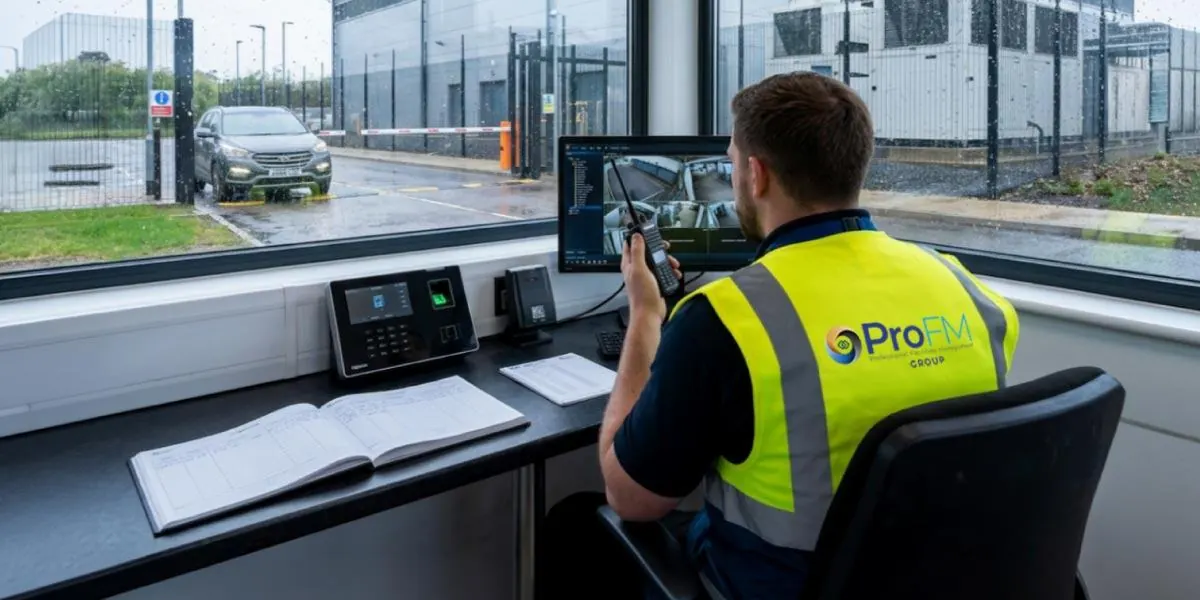
The gatehouse is where most of a distribution centre’s risk enters and leaves. Every driver, vehicle, visitor, contractor and load passes it, often around the clock. A gatehouse security officer controls that flow to your procedures, so nothing and no one reaches your yard, docks or stock without being checked and recorded.
That sounds simple, but on a busy site it means handling dozens or hundreds of vehicle movements a shift, each with its own paperwork, booking slot and risk. It is one of the most demanding roles in manned guarding, and one of the most valuable. It is also a customer service role: the level of service drivers and visitors get at the gate shapes how they see your warehouse, and a good officer keeps the facility secure and the yard moving at the same time.
The core duties, shift by shift
| Duty | What it involves | Why it matters |
|---|---|---|
| Vehicle and driver checks | Checking the driver’s ID, vehicle registration, booking reference and delivery or collection paperwork | Stops fictitious collections and unbooked vehicles reaching the yard |
| Seal and load checks | Recording trailer seal numbers in and out and flagging any mismatch | Makes tampering and loss traceable to a point in time |
| Visitor and contractor control | Sign-in, passes, site rules and PPE briefing, permits to work for contractors | Only authorised, inducted people reach the floor |
| Yard and banksman support | Directing drivers to the right bay, reversing assistance, keeping pedestrians segregated | Keeps vehicle movements safe and the yard flowing |
| Logging and reporting | Full ingress and egress log, incident reports, handover notes | Gives you evidence for audits, insurers and investigations |
| Searches where agreed | Vehicle and bag searches in line with your policy and with consent | A visible, consistent deterrent to internal theft |
Typical gatehouse duties on ProFM warehouse sites. Exact duties are set in assignment instructions agreed with each client.
Licensing and vetting: what the law requires
In the UK, anyone guarding premises against unauthorised access, or property against damage or theft, under a contract for services needs a front-line security guard licence from the Security Industry Authority (SIA). To qualify, an applicant must be 18 or over, pass identity and criminal record checks, hold a licence-linked qualification and have the right to work in the UK. Since 2021, applicants also need first aid training before taking their licence training.
At ProFM, every officer is SIA-licensed and vetted to BS 7858, the British Standard for screening people employed in a security environment, before they set foot on a client site. ProFM Group is also an SIA Approved Contractor, which you can check on the SIA’s public register.
A typical gatehouse shift
No two sites run the same way, but most gatehouse duties follow the same rhythm. At the start of the shift, the security officer takes a handover from the previous officer, reads the occurrence log and checks the expected bookings, temporary passes and any contractors due on site that day.
The early hours are usually the busiest. Inbound loads arrive for the morning pick, agency staff and employees come through the pedestrian gate and outbound trailers wait for collection. The officer checks each driver and vehicle against the booking, records seal numbers, issues visitor passes and keeps the queue moving without cutting corners on the security procedures. Between peaks, the officer monitors CCTV and site security systems, supports the warehouse team with deliveries and urgent service calls, carries out yard checks and patrols where the assignment instructions allow.
When something goes wrong, the gatehouse is the first point of contact. A fire alarm, a medical emergency or an injury in the yard means the officer controls site access for the emergency services, opens the gates, guides crews to the right place and accounts for visitors on the sign-in list. Every incident is written up before the end of the shift, so the next officer and the site manager know what happened.
The skills that make a good gatehouse security officer
Holding a valid SIA licence is the minimum. What separates a good gatehouse officer from an average security guard is how they handle people and pressure.
- Excellent communication. Officers deal with drivers who may not speak English as a first language, contractors in a hurry and senior visitors. Clear, polite instructions keep things moving and reduce conflict.
- A professional approach to every check. The hundredth vehicle of the night gets the same check as the first. Shortcuts are how fictitious collections and theft get through.
- Attention to detail. Spotting a wrong seal number, a mismatched trailer or an expired pass is the job.
- Confidence with technology. Many gatehouses now run ANPR cameras, visitor management systems, booking portals and access control software alongside CCTV.
- Good reporting. Clear logs and incident reports protect the business in audits, insurance claims and investigations.
- A welcoming manner. The gatehouse is the first impression of your site for customers and visitors. A visible security presence should feel professional, not hostile.
Some sites also ask for a full driving licence, so the officer can move vehicles or cover mobile patrols, and banksman training for yard work. We agree these requirements with each client before we recruit or assign officers.
How the gatehouse fits into wider site security
A gatehouse on its own cannot protect a whole facility. On most warehouse sites, it works alongside perimeter fencing, CCTV, access control, internal patrols and alarm monitoring. The gatehouse security officer is the person who joins these up: they see who comes in, check what goes out and raise security concerns before they become security breaches.
Common risks at the gate include fictitious collections, where criminals pose as legitimate hauliers, tailgating through pedestrian gates, staff removing stock in personal vehicles and contractors working without a permit. Each of these is reduced by consistent checks, a clear policy on searches and a log that is reviewed, not just filed.
It also matters for health and safety and compliance. Officers who control vehicle movements and keep pedestrians segregated reduce yard accidents, and accurate sign-in records mean you know exactly who is on the premises if you need to evacuate. For temporary peaks, such as Black Friday or the run-up to Christmas, a professional security services provider can add officers at short notice so your gatehouse duties do not slip when volumes rise.
Manned gatehouse or automated access control?
Barriers, ANPR and automated access control are useful, and many of our clients use them. But technology cannot check paperwork, challenge a driver whose story does not add up or help when an incident happens. Most distribution centres with regular HGV traffic use a combination: technology to speed up routine entry, and a professional security officer to deal with exceptions, inspect loads and make judgement calls. Where traffic is light, remote monitoring with mobile patrols can be a cost-effective alternative. We look at volumes, risk and budget during a free site survey before recommending either.
Why gatehouse security matters to the whole business
For most warehouse and distribution businesses, the gatehouse plays a vital role well beyond controlling access. It protects stock and vehicles, keeps colleagues safe in the yard and gives customers confidence that their goods are handled by a reliable, professional company. A professional security presence at the gate is often the first thing a client, auditor or insurer notices when they arrive at your facility.
The benefits show up in the numbers too. Consistent checks reduce shortages and fictitious collections, accurate logs speed up investigations when incidents happen, and a well-run gatehouse helps the warehouse hit its delivery slots instead of queuing trucks onto the road. Good security personnel also identify problems early: a driver who keeps arriving without paperwork, a gate left open at night, or a contractor who is not on the approved list.
Quality matters as much as cover. Across the UK security industry, the officers who perform best are the ones who are inducted properly, briefed in advance on site rules and supported by managers who visit, monitor standards and act on feedback. That is why we are committed to recruiting locally, training officers on your procedures before they start and reviewing gatehouse performance with you every month. A welcoming environment for genuine visitors and a firm line for everyone else is what good gatehouse security services deliver, every hour of every shift.
What it looks like on real sites
Lloyd’s Transport and Warehousing, Tamworth. High-value national and international shipments next to busy motorway links. Our officers run a 24/7 gatehouse and check every delivery in to Lloyd’s own procedures. Read the case study.
Sykes Seafood, Warrington. A 168,000 sq ft site packing 350 tonnes of seafood a week. Our officers keep a full ingress and egress log, check vehicles and support drivers as banksmen, with patrols through the night. Read the case study.
Choosing a gatehouse security services provider
Before you appoint a provider, ask how they maintain standards at the gate, who is responsible for the contract day to day and how they report incidents and security concerns to you.
Sources
- GOV.UK: Find out if you need an SIA licence
- SIA: Get Licensed (February 2025)
- GOV.UK: Changes to the training you need for an SIA licence
- ProFM Group: Lloyd’s Transport case study
- ProFM Group: Sykes Seafood case study

ProFM Group (formerly Churchill Support Services) has protected and cleaned UK businesses since 1996. Our security officers are SIA-licensed and vetted to BS 7858, our cleaning teams are BICSc members, and every shift is overseen by our National Operations Centre in Chorley. This guide draws on what we see every week on the warehouse, logistics and manufacturing sites we look after.